Roof Moss Removal in Eugene, OR
Locally Owned · Soft-Wash Only — Never Pressure Washed · Firm Quote Before Work Starts · Free Inspection
If you are searching for roof moss removal in Eugene, OR, you are looking at the same thick green carpet we see on half the roofs between the Willamette River and the fir-covered hills. We remove moss the right way: careful hand removal, a biocide treatment that kills regrowth at the root, and prevention that keeps it from coming back. No pressure washer ever touches your shingles.
How much does roof moss removal cost in Eugene? Composition shingle roofs typically run $300–$600; steep or two-storey homes $400–$700; cedar shake $500–$900. A standalone preventative moss treatment starts at $200. Prices checked October 2026.
What is the method? Hand and soft-bristle removal first, then a biodegradable moss treatment — never pressure washing. The Asphalt Roofing Manufacturers Association (ARMA) advises against pressure washing asphalt shingles; we rinse every roof at under 500 PSI. Prefer to tackle light moss yourself? See our guide on how to remove moss from a roof in Eugene.
How long does roof moss removal last? A full remove-and-treat service typically holds 2–4 years in the Willamette Valley. An annual prevention treatment keeps moss away 12–18 months per application.
Do you serve my area? All Eugene ZIPs 97401–97405 plus Springfield, Coburg, Junction City, Cottage Grove, and Veneta.
Why Eugene Roofs Grow Moss
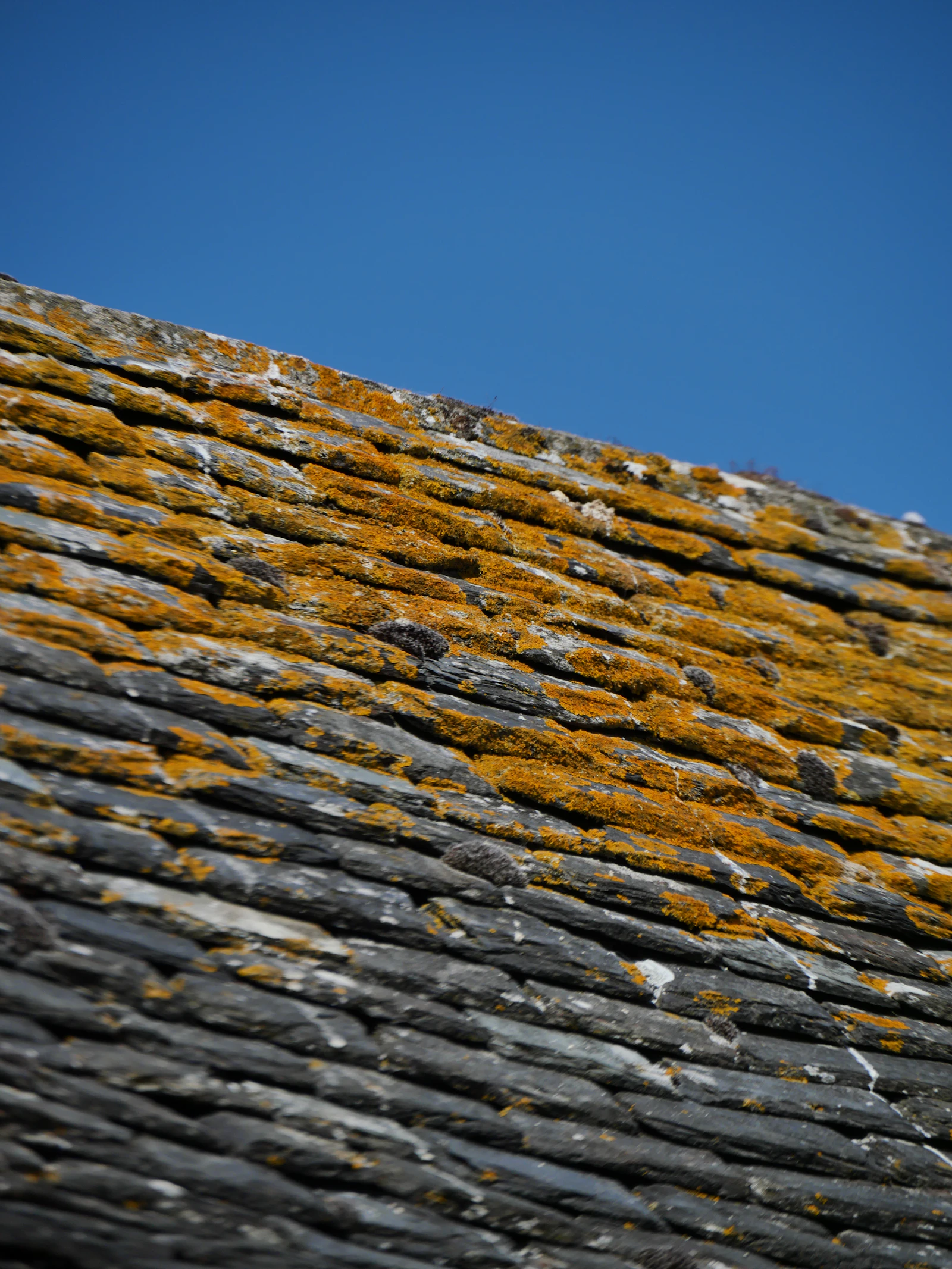
Eugene gets about 47 inches of rain a year, and roughly 92% of it falls between October and May. Moss — and the orange lichen spreading across north-facing slopes — thrives in exactly that window. OSU Extension notes that moss grows most actively through fall, winter, and spring. Add Douglas-fir needles that drop year-round and trap moisture against the shingles, plus the deep shade of the valley’s tree canopy, and you have a perfect moss nursery.
ARMA points out that moss and algae colonize north-facing roof planes first, where the sun never fully dries the surface. In older Eugene neighborhoods like Friendly, Amazon, and Whiteaker — where mature firs overhang the roofline — we regularly find moss mats two inches thick, lifting shingle tabs clean off the deck.
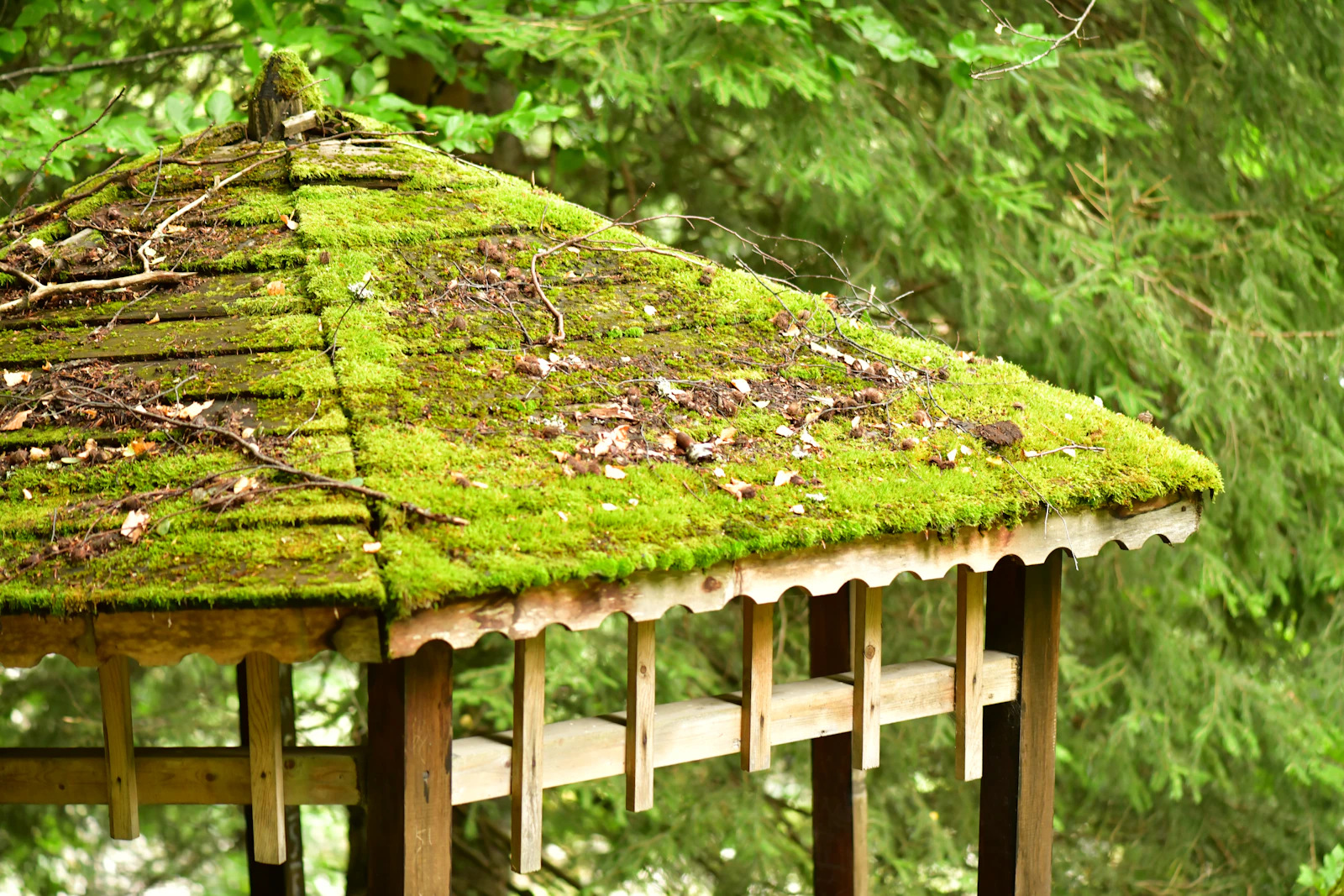
Moss is not just cosmetic. Its root-like rhizoids work under shingle edges and lift the tabs, so wind-driven rain gets underneath. Trapped moisture rots the shingle mat, and most manufacturers exclude moss damage from their warranties. Removing moss from a roof is maintenance, not vanity.
Our 3-Step Roof Moss Removal Process
Brush-only removal — what some companies sell — leaves the root system alive, so moss grows back within months. Treatment-only skips the heavy lifting and leaves dead mats clogging your valleys and gutters. Our process does all three steps, in order:
- Manual removal. We hand-remove heavy moss with soft-bristle brushes and plastic scrapers, working down-slope so we never lift a shingle tab. Moss debris gets cleared from the gutters at the same time — see our gutter cleaning in Eugene. No wire brushes, no pressure washers — ever.
- Biocide treatment. We apply a biodegradable moss treatment that soaks into the remaining moss, lichen, and algae and kills them at the root. The treatment does the work over the following weeks; dead growth releases and washes away with the rain. Every roof is rinsed at under 500 PSI — about garden-hose strength.
- Prevention. We finish with a preventative treatment and, where it fits, zinc or copper strips at the ridge. Each rain releases metal ions that wash down-slope and suppress new moss for 12–18 months. Most clients roll this into an annual plan from $200/year — far cheaper than another full removal.
Roof Moss Removal by Roof Type
Moss removal is not one-size-fits-all. The method has to match the roofing material — get it wrong and you will do more damage than the moss. That is why we never pressure wash roofs (pressure washing is for concrete only). See our guide to the best way to remove moss from a roof in Eugene.
| Roof type | Our method | What to expect |
|---|---|---|
| Composition / asphalt shingle | Hand + soft-bristle removal, biocide treatment, sub-500 PSI rinse | Usually a same-day service; granule loss stops once the moss is gone |
| Cedar shake | Hand removal only, oxygen-based treatment, no pressure of any kind | Slower, more delicate work; shakes are checked for rot as we go |
| Tile & metal | Soft-bristle removal, treatment, low-pressure rinse | Moss releases cleanly; we check fasteners and flashing while we are up there |
Homes built before the mid-1980s sometimes have asbestos-cement shingles — one more reason pressure washing is off the table. If your roof predates 1985, mention it at inspection and we will confirm the material before any work begins.
Roof Moss Removal Prices in Eugene
Prices checked October 2026.
| Service | Price band |
|---|---|
| Composition shingle — standard, single storey | $300–$600 |
| Steep or two-storey composition | $400–$700 |
| Cedar shake (hand removal + treatment) | $500–$900 |
| Standalone preventative moss treatment | $200–$500 |
| Typical job length | 2–5 hours |
Firm quote before work starts; the price is locked unless the scope changes.
The lifespan economics: a full roof replacement in Eugene runs $8,000–$15,000 or more. A $300–$600 remove-and-treat service every 2–4 years — or a $200/year prevention plan — is a fraction of that, and it keeps your shingle warranty intact. Moss left alone does not stop; it compounds.
October Is the Treatment Window
Here is the seasonal math: OSU Extension notes that moss grows through fall, winter, and spring — exactly when Eugene gets about 92% of its rain. Treating in October hits moss at the start of its growth season, so the treatment works with the rains instead of against them. Book in October and your roof goes into winter clean and protected; wait until spring and you are paying to remove a winter’s worth of new growth.
Summer is not the time — moss goes dormant in dry heat and treatment uptake drops. October is the sweet spot, and it is our busiest month, so inspections book out. Request your free inspection before the rains settle in.
Request Your Free Inspection
Tell us about your roof — shingle type, stories, how bad the moss is — and we will reply with a firm quote, usually same day.
Prefer to browse first? See our roof cleaning services or reach us on the contact page.