How to Remove Moss From Your Roof in Eugene, OR
If your Eugene roof is going green, you’re in good company — Eugene’s 47 inches of annual rain and heavy fir-tree cover make it one of the moss-friendliest cities in Oregon. The good news: moss comes off safely without a pressure washer and without wrecking your shingles, as long as you follow the method Oregon State University Extension actually recommends. This guide walks you through it step by step — what works, what to avoid, when to do it yourself, and when to call a local pro.
Quick Answer
- Safest method? Brush off the bulk with a soft-bristle brush, spray a 1:4 bleach-and-water solution (or zinc sulfate) from a garden sprayer, let it dwell 15–20 minutes, then rinse with a garden hose. Never a pressure washer.
- Best time in Eugene? October — moss grows vigorously in fall, winter, and spring (OSU Extension), so treating in fall hits it while it’s actively growing, with rain on the way to help the rinse.
- What does a pro charge in Eugene? Typically $300–$600 for roof moss removal, depending on roof size and severity (Prices checked October 2026).
- When should I call a pro? Steep or multi-story roof, thick established moss, lifted or curling shingles, or cedar shake.
Moss or Algae — Which One Is Actually on Your Roof?
Not everything green on a roof is moss, and the fix is different for each. Black streaks running down your shingles are usually Gloeocapsa magma — a blue-green algae that stains but doesn’t root into the shingle. Raised green clumps, cushions, and fuzzy patches are true moss, and moss is the one that holds moisture against your roof and pries shingle edges upward. Algae responds best to a low-pressure soft wash (see our guide to roof soft washing in Eugene). Moss needs the removal method below.
Why Eugene Roofs Grow Moss Faster Than Almost Anywhere Else
Eugene checks every box on moss’s wishlist: 47 inches of rain a year, a long Marine West Coast wet season from November through February, mild temperatures that keep moss growing year-round, and heavy Douglas-fir cover that packs needles into valleys and behind chimneys — those needle packs hold moisture against the roof for weeks. Add shaded slopes in the South Hills and along Crest Drive, where moss can colonize within two to three years of a cleaning, plus north-facing planes that stay damp all winter (the Asphalt Roofing Manufacturers Association flags north slopes as the classic moss zone). Portland-metro roof cleaners will tell you their Oregon rain story, but Eugene’s fir-needle packing and south-valley humidity pattern are their own thing — and they’re why a generic Pacific Northwest moss guide isn’t enough here.
Is Moss Actually Damaging Your Roof?
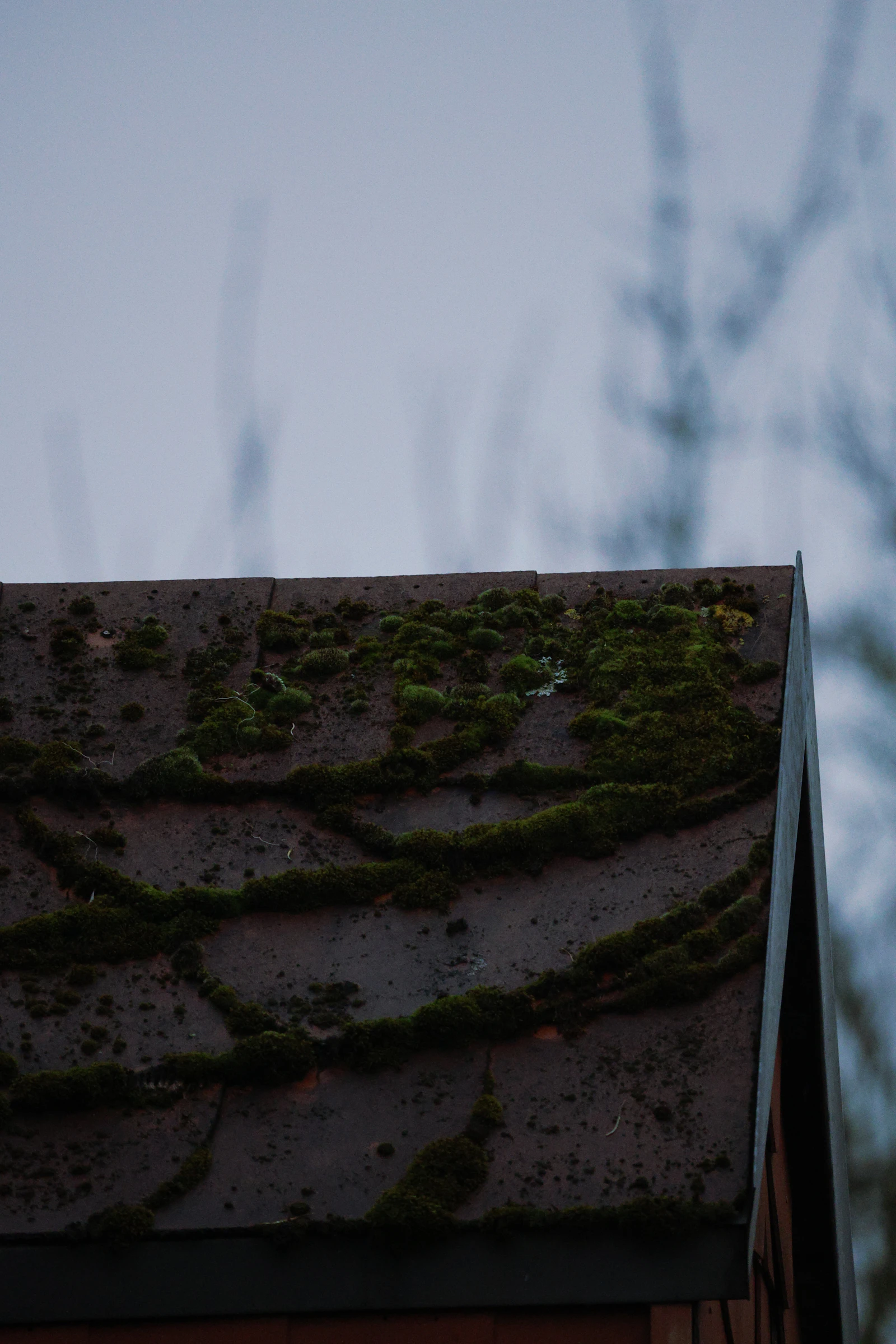
Yes — moss isn’t just a curb-appeal problem. It works like a sponge pinned to your roof: it holds moisture against the shingles around the clock, lifts shingle edges so wind and rain get underneath, and accelerates granule loss on asphalt shingles. As moss dies and sloughs off, the debris washes into your gutters, packs them solid, and causes overflow that rots fascia boards and splashes back onto the foundation. Left alone for years, a mossy roof leaks sooner and dies younger than a clean one — which is the expensive version of a problem that a $15 bottle of solution and a Saturday morning could have prevented. (If your gutters are already clogged with moss debris, our Eugene gutter cleaning guide explains what a proper cleaning includes.)
The Safe DIY Method, Step by Step
This is the OSU Extension-aligned approach: about $15–$30 in supplies and half a day of work. It suits single-story, walkable-pitch roofs with light to moderate growth. If your roof is steep, multi-story, or the moss is a thick established mat, skip to the “DIY or call a pro” section below — no how-to is worth a fall.
Step 1 — Pick your day
Work on a cool, overcast day and avoid hot midday sun — heat dries your solution out before it can work. Ideally, rain is expected within a few days to help rinse everything clean. And one hard rule: never climb onto a wet, mossy roof. Wet moss is slicker than ice.
Step 2 — Protect your plants
Pre-wet all vegetation, shrubs, and lawn around the roof’s drip line with plain water, and cover delicate plantings with plastic tarps. You’ll be rinsing a bleach-based or zinc-based solution off the roof — diluted runoff is manageable, but you want it directed away from beds, not soaking them.
Step 3 — Brush off the bulk first
Use a soft-bristle brush or push broom and work from the TOP of the slope downward, with the shingle laps. Get the loose mats and debris off before any chemistry goes on — solution can’t reach moss it’s sitting on top of. Never scrub upward against the laps: upward brushing lifts shingle tabs and breaks their seals.
Step 4 — Mix and spray your solution
Use a garden pump sprayer and pick one of these:
- Option A (most common): 1 part household bleach to 4 parts water. This is the ratio Oregon roof cleaners use every day — strong enough to kill moss, dilute enough to be safe on asphalt shingles when rinsed properly.
- Option B: zinc sulfate — 3 lbs dissolved in 9 gallons of water treats roughly 600–1,000 square feet (OSU Extension’s published rate). Zinc sulfate needs reapplication over time, and it comes with one hard warning: NEVER use it if you have copper gutters or flashing — it corrodes copper.
Spray the mossy areas evenly and avoid overspray onto plants and painted surfaces.
Step 5 — Let it dwell 15–20 minutes
Give the solution time to work — 15 to 20 minutes is the sweet spot. Keep the surface wet; if it starts drying, re-mist it. Dried-out solution is wasted solution, and it’s harder on your shingles than a properly timed rinse.
Step 6 — Rinse low and slow
Rinse with a regular garden hose — no pressure-washer attachment, no nozzle blast — working from the top down. Let gravity do the work. The moss will brown out over the next several days and slough off over one to three weeks. Don’t force it with aggressive brushing; dead moss releases on its own.
Step 7 — Do a second pass if needed
Heavy, established growth often needs two treatments a few weeks apart — OSU Extension notes that moss products need reapplication. Treat, wait, reassess. If the second pass doesn’t finish the job, that’s your sign to call a professional.
A note from the field
You’ll see the moss brown out within days of treatment, and that’s when most homeowners make their biggest mistake — scraping the dead moss off with a stiff brush. Don’t. Dead moss comes loose on its own in a week or two. Scrape at it and you’re grinding granules off your shingles for nothing.
What NOT to Do — The Mistakes That Wreck Eugene Roofs
- No pressure washer on asphalt shingles. This is the number-one mistake in Oregon. A pressure washer blasts off the protective granule layer that shields your shingles from UV, and ARMA is blunt about it: high-pressure washing can void your roof’s warranty.
- No upward brushing. Scrubbing against the shingle laps lifts tabs and breaks the sealant strips holding them down.
- No undiluted bleach or mystery chemicals. Full-strength bleach and harsh solvents damage shingles, kill landscaping, and stain siding. The 1:4 dilution exists for a reason.
- No DIY on wet, steep, or moss-slick roofs. If you can’t stand on the slope comfortably in dry conditions, you have no business up there at all.
- No zinc sulfate near copper. Copper gutters, copper flashing, copper valleys — zinc sulfate corrodes all of them (OSU Extension).
- No skipping plant protection. A tarp and a pre-wet take ten minutes; replacing dead shrubs takes a season.
DIY or Call a Pro? The Honest Decision Framework
Doing it yourself is reasonable when: the roof is single-story with a walkable pitch, the moss is light to moderate, you own (or can borrow) a garden sprayer and a stable ladder, and you’re comfortable working at height. To compare every method side by side, see the best way to remove moss from a roof.
Call a professional when: the roof is steep or multi-story, the moss is a thick established mat, shingles are lifted, curling, or near end of life, the roof is cedar shake (softer, easy to gouge — pros only), or you simply can’t reach the growth safely.
Price anchors so you can decide honestly: professional roof moss removal in Eugene typically runs $300–$600 depending on roof size, pitch, and moss severity (Prices checked October 2026 — see the full Eugene price breakdown). If you’d rather not spend a Saturday on a ladder, our Eugene roof moss removal service handles the whole job — removal, treatment, and prevention — with soft-wash methods that protect your shingles and your warranty.
Keep It From Coming Back — The Eugene Prevention Calendar
Cleaning is half the job. Eugene’s climate will regrow visible moss in one to three years without prevention — faster on shaded north slopes. Here’s how to stretch that to three to five-plus years:
- Install zinc or copper strips at the ridge. Rainwater picks up metal ions as it washes down the slope, inhibiting moss growth below. (No copper strips or copper-based products if you have copper gutters — corrosion, per OSU.)
- Trim overhanging fir branches. Sunlight and airflow are moss’s enemies; a shaded roof is a moss farm.
- Keep your gutters clean. Moss slough clogs gutters, and clogged gutters soak the roof edge — the cycle feeds itself.
- Schedule a preventive treatment each fall. A light treatment every October beats a heavy cleaning every three years — and it’s cheaper. Our Eugene roof moss treatment programs explain the options, from a standalone treatment to a full annual maintenance plan.
- The calendar: October = treat (moss is actively growing, rain is coming). Spring = inspect and clear fir-needle packs from valleys. After every windstorm = check the valleys again. (Main site: see the full service list.)
Frequently Asked Questions
Can I use bleach to remove moss from my roof?
Yes — household bleach diluted 1:4 with water is the standard DIY solution Oregon roof cleaners use. Apply with a garden pump sprayer, let it dwell 15–20 minutes without drying, then rinse with a garden hose. Pre-wet and cover nearby plants first; diluted runoff is manageable, undiluted bleach is not.
Will a pressure washer remove moss from my roof?
It will remove the moss — along with the protective granule layer on your asphalt shingles. ARMA warns that high-pressure washing damages shingles and can void your roof’s manufacturer warranty. Always use low-pressure methods: a soft brush, garden sprayer, and hose.
What is the best time of year to remove moss in Eugene?
October. OSU Extension notes moss grows vigorously in fall, winter, and spring, so treating in fall hits it while it’s actively growing — and the rainy season ahead helps rinse the treatment. Avoid hot summer days when solution dries out too fast.
How long does moss removal last?
Dead moss sloughs off over one to three weeks. Without prevention, Eugene’s climate typically regrows visible moss within one to three years — faster on shaded north-facing slopes. Zinc strips plus an annual preventive treatment stretch that to three to five years or more.
How much does professional moss removal cost in Eugene?
Typically $300–$600, depending on roof size, pitch, and how established the moss is (Prices checked October 2026). That usually includes the cleaning; ongoing treatment programs cost extra.
Is moss removal different for cedar shake roofs?
Yes — cedar is softer and much easier to gouge or split, so skip the stiff brush entirely and go lighter on any treatment. Most homeowners with cedar shake should hire a professional experienced with wood roofs rather than DIY.
Can I use zinc sulfate if I have copper gutters?
No. OSU Extension specifically warns that zinc sulfate corrodes copper gutters and flashing. Use a bleach-based solution instead, or hire a professional who can work around copper safely.
Will removing moss void my roof warranty?
Removing moss the right way protects your warranty — it’s high-pressure washing that voids it. Keep to low-pressure methods (brush, sprayer, hose) and you stay on the right side of both ARMA guidance and your manufacturer’s terms.
Rather Leave It to a Local Pro?
If the ladder stays in the garage, that’s a fine call too. Request a free roof inspection and get a written quote — no pressure, no obligation.